
Menu
How to Choose the Right Countertop Edge Profile for Your Kitchen
Your 2026 Guide to Edge Styles, Kitchen Design, and Safety Considerations
When homeowners choose new countertops, most of the attention goes to the material and colour. Quartz or granite. White or grey. Polished or leathered. But one detail that has a bigger impact than many people realize is the edge profile. The edge profile is the shape of the exposed edge of the countertop. It affects the overall style of the kitchen, how the light hits the surface, how easy the counters are to clean, and even how safe the finished kitchen feels for young children. In some homes, the right edge profile helps create a clean, modern look. In others, it adds softness, detail, or a more traditional finish. It can also influence fabrication time and cost depending on how simple or decorative the chosen profile is. This guide explains the most common countertop edge profiles, how they affect the final look of a kitchen, and how Calgary homeowners can choose the right one for their layout, style, and day-to-day needs.
What is a Countertop Edge Profile?
A countertop edge profile is the finished shape of the visible edge of the slab. Once a countertop has been cut to fit the kitchen layout, the fabricator shapes and polishes the exposed edges according to the homeowner’s selected style. This applies to perimeter counters, islands, peninsulas, bathroom vanities, and waterfall edges. At first glance, edge profiles may seem like a small design detail. But in practice, they influence several important things:
- How modern or traditional the kitchen feels
- How thick or substantial the countertop appears
- How noticeable the stone pattern becomes
- How comfortable the edge feels when leaning against it
- How safe the corners are in family homes
Because countertops are one of the most visible surfaces in a kitchen, the edge profile plays a meaningful role in the overall finished look.
Why Edge Profiles Matter More Than Many Homeowners Expect
Most homeowners begin their countertop selection by comparing slab colours and samples. But the edge profile is what gives the countertop its final character. For example, a plain white quartz with a simple eased edge can look sleek and contemporary. The same material with a decorative ogee edge would feel much more traditional. Edge profiles also affect practicality. Some are easier to wipe clean. Some are better at hiding minor chips. Others create a sharper, more architectural appearance but may be less forgiving in households with small children. In Calgary homes, edge profile decisions often come down to three things:
- The style of the kitchen
- The age and layout of the home
- How the family uses the space day to day
Newer homes and modern renovations often lean toward cleaner, simpler edges. More traditional homes may suit softer or more decorative profiles.
What Are the Most Popular Countertop Edge Profiles?
There are many possible edge profiles, but a handful are used most often in Calgary kitchens.
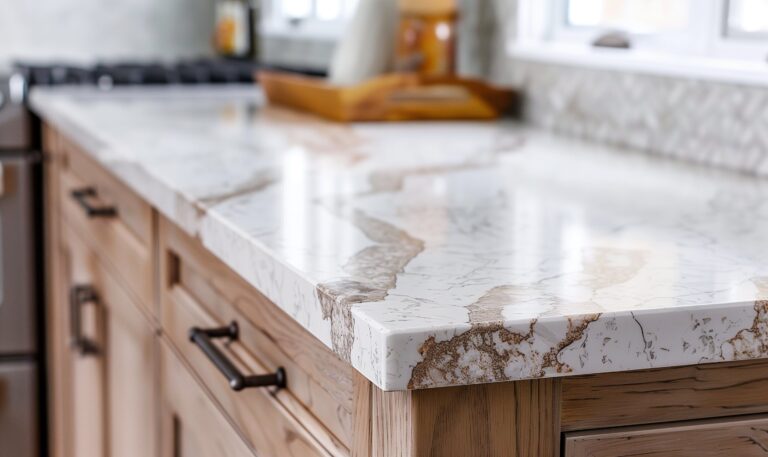
Eased Edge
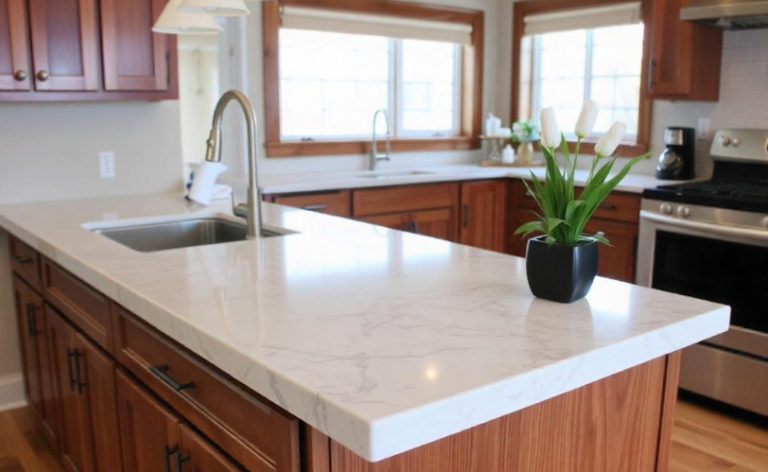
The eased edge is one of the most popular choices because it is simple, clean, and versatile. Although it looks square from a distance, the corners are slightly softened so the edge is not actually sharp. This makes it comfortable to use while still maintaining a modern appearance. Why homeowners choose it:
- Works well in contemporary kitchens
- Easy to clean
- Subtle and understated
- Pairs well with quartz and granite
This is often the default choice for homeowners who want a timeless look that will not feel dated in a few years.
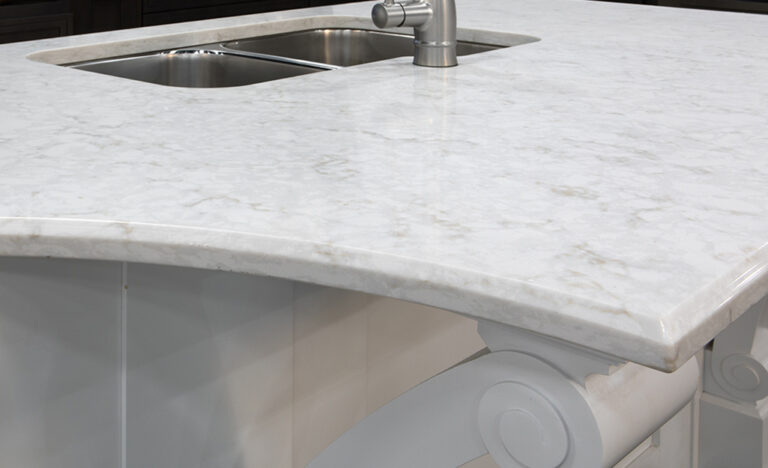
Beveled Edge
A beveled edge features a subtle angled cut along the top or bottom of the edge. This gives the countertop a slightly more detailed and architectural appearance without becoming overly ornate. It works well in kitchens that want a bit more character than a simple eased edge but still feel fairly modern. Why homeowners choose it:
- Adds visual definition
- Works well with transitional kitchens
- Reflects light in an interesting way
- Slightly dressier than a standard eased edge
Beveled edges are a good middle ground for homeowners who want something a little more distinctive without going too decorative.
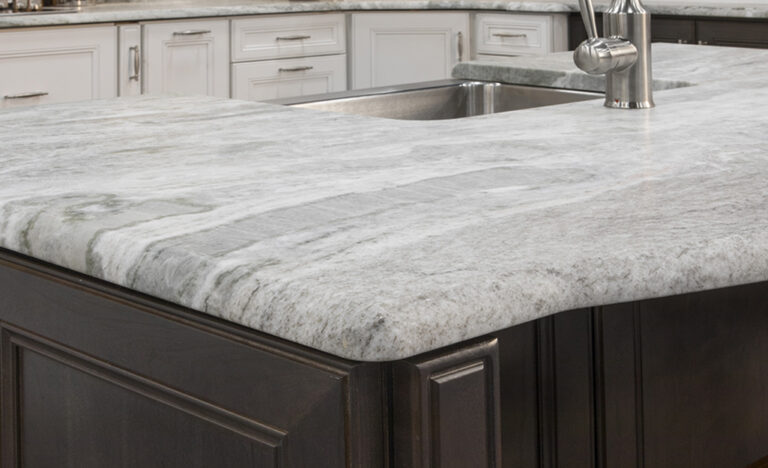
Half Bullnose
A half bullnose edge has a rounded top and a flatter underside. This creates a softer profile while still maintaining some structure. It is a popular option for families because it reduces the harshness of sharp corners while still looking polished and intentional. Why homeowners choose it:
- Softer look and feel
- Safer in family homes
- Comfortable along islands and prep areas
- Suitable for both traditional and transitional kitchens
This edge works especially well in kitchens where homeowners want comfort and durability without making the counters look overly decorative.
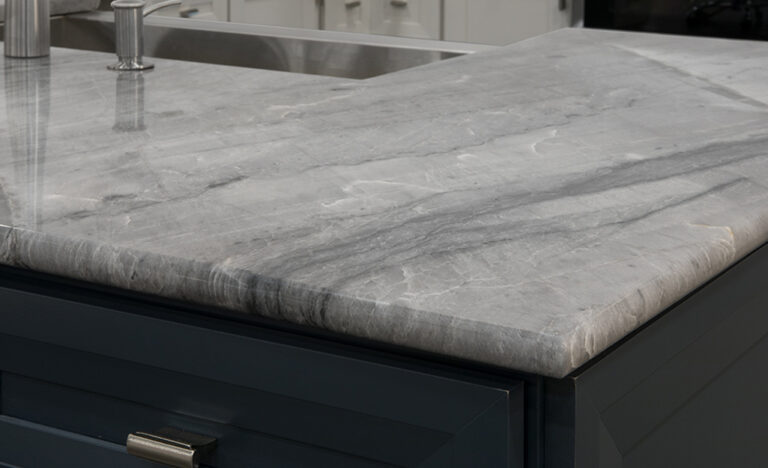
Full Bullnose
A full bullnose edge is rounded from top to bottom. It creates a softer, more traditional appearance and is often chosen in homes where sharp corners feel too modern or severe. Because it is fully rounded, it also tends to be one of the more family-friendly options. Why homeowners choose it:
- Rounded, classic appearance
- Reduced sharpness at corners
- Comfortable edge to lean against
- Often used in traditional homes
That said, some homeowners find full bullnose edges a little less current in modern kitchen designs.
Miter Edge
A miter edge is designed to make the countertop look much thicker than it really is. Instead of using a very thick slab, fabricators join pieces at the edge to create the visual impression of a heavier, more dramatic surface. This is especially popular in modern luxury kitchens and waterfall islands. Why homeowners choose it:
- Bold, high-end appearance
- Makes islands feel more substantial
- Complements modern kitchen design
- Works well for statement pieces
Miter edges are often used when the goal is to create a more dramatic visual impact.
Are Some Edge Profiles More Modern Than Others?
Yes. Edge profiles have a noticeable effect on how modern or traditional a countertop feels.
In most Calgary kitchen renovations, the most modern-looking profiles are:
- Eased edge
- Straight edge
- Miter edge
These tend to suit:
- Flat-panel cabinetry
- Waterfall islands
- Minimalist backsplashes
- Simple hardware and fixtures
Traditional or more decorative kitchens often pair better with:
- Half bullnose
- Full bullnose
- Bevel
- Ogee-style edges
These tend to work well with:
- Raised-panel cabinets
- Warmer wood tones
- More detailed trim and mouldings
If the goal is to create a kitchen that feels current and timeless, an eased edge is usually the safest choice.
Which Countertop Edge Profiles Are Best for Families with Kids?
For households with young children, safety and comfort often matter just as much as style. Countertop corners and island edges are places where people regularly bump into the stone, especially in busy kitchens where multiple people are moving around at once. Generally, the most family-friendly options are:
- Eased edge
- Half bullnose
- Full bullnose
These profiles reduce the severity of sharp corners and feel softer in everyday use. This does not mean modern kitchens need to sacrifice style. Many homeowners choose an eased edge because it still looks clean and contemporary while being more forgiving than a truly square edge.
Do Edge Profiles Affect Cleaning and Maintenance?
Yes, although the difference is usually subtle. Simpler edge profiles are generally easier to clean because there are fewer grooves or decorative curves where crumbs, dust, or spills can collect. For example:
- Eased edges are very easy to wipe clean
- Beveled edges are still fairly low maintenance
- Decorative edges may require a bit more attention
In busy family kitchens, this often becomes an important consideration. Homeowners who cook frequently or want the lowest-maintenance option usually lean toward simpler profiles. The good news is that regardless of profile, both quartz and properly sealed granite remain relatively easy to care for with routine cleaning.
Do Certain Edge Profiles Chip More Easily?
Any stone countertop can chip if struck hard enough, especially at corners or sink cutouts. However, sharper and more angular edges tend to show chipping more visibly than softer, rounded profiles. For example, a very crisp square-looking edge may reveal minor damage more clearly than a half bullnose or eased edge. This is one reason many installers recommend avoiding overly sharp profiles in high-traffic family kitchens. In general:
- Simpler profiles are durable
- Softened profiles can be more forgiving
- Corners remain the most vulnerable points regardless of profile
A good fabricator will also help ensure the edge is finished in a way that balances design with practical durability.
Do Edge Profiles Change the Price of Countertops?
Yes, edge profiles can affect fabrication cost. Basic edges such as eased or simple bevels are usually included in standard countertop pricing. These are fast to fabricate, easy to polish, and commonly requested. More decorative or complex profiles typically require:
- More fabrication time
- More polishing work
- Greater precision during finishing
As a result, they may increase the overall cost of the project. Miter edges may also increase pricing because they involve more labour and a more specialized fabrication process. If budget matters, homeowners should always ask which edge profiles are included in the quoted price and which ones cost extra.
How should you choose an edge profile for your kitchen style?
The best edge profile usually depends on the overall design direction of the kitchen.
For Modern Kitchens
Modern kitchens usually look best with:
- Eased edge
- Straight edge
- Miter edge
These profiles support a cleaner, simpler design language.
For Transitional Kitchens
Transitional kitchens often work well with:
- Eased edge
- Bevel edge
- Half bullnose
These styles blend classic and modern elements without feeling too plain or too ornate.
For Traditional Kitchens
Traditional kitchens often suit:
- Bevel edge
- Half bullnose
- Full bullnose
- Decorative ogee-style edges
These profiles complement more detailed cabinetry and classic design features. In many cases, the cabinetry style matters just as much as the stone colour. The edge should feel like it belongs with the rest of the kitchen, not like an afterthought.
What Edge Profiles Are Most Popular in Calgary Kitchens Right Now?
In Calgary, simpler and more contemporary profiles have become increasingly popular, especially in homes undergoing full kitchen renovations. Many homeowners are choosing:
- Eased edges for quartz countertops
- Miter edges for large islands
- Subtle bevels in transitional kitchens
This reflects broader design trends toward cleaner lines, lighter colour palettes, and low-maintenance finishes. That said, more traditional homes in older Calgary neighbourhoods may still suit softer or more decorative profiles depending on the cabinetry and overall character of the home.
Should Your Installer Help You Choose the Edge Profile?
Yes, and a good installer usually will. Homeowners often know the material and colour they want, but edge profiles can be harder to visualize from small showroom samples alone. An experienced countertop installer can help by explaining:
- Which edge styles suit your selected material
- What is included in the quoted price
- Which options are most practical for your household
- How different edges will look with your cabinets and island
This conversation usually happens during the templating or final design stage, once the layout and material have been selected.
Final Thoughts
Choosing the right countertop edge profile is about more than appearance. The edge affects style, comfort, safety, maintenance, and even project cost. For many Calgary homeowners, the best option is one that balances looks with practicality. A clean eased edge may be perfect for a modern family kitchen, while a beveled or bullnose edge may better suit a more classic design. If you are planning new countertops, discussing edge profile options early in the process can help ensure the finished kitchen feels cohesive, functional, and well thought out.
If you’re considering new countertops, you can request a free estimate by submitting your measurements HERE or contact AAA Countertops directly:
(587) 586-2133
gary@aaacountertops.ca

$500 Off your install or a free sink
Limited Time Offer – Call or Get a Free Estimate Today!
What our customers say
Request an Estimate Below
Please answer the questions below to receive an estimate and get access to our $500 off or free sink promo.