
Menu
What Are the Most Durable Kitchen Countertop Materials?
A Complete Homeowner's Guide
When choosing new kitchen countertops, appearance is important. But durability often matters even more. Your countertops are one of the hardest-working surfaces in your home. Every day, they’re exposed to cooking, food preparation, heavy cookware, spills, cleaning products, and constant use. The right material should continue looking great after years of everyday wear, while the wrong material may begin showing scratches, stains, or chips much sooner than expected.
So, which countertop material is the most durable? The answer isn’t as simple as naming a single winner. Different countertop materials excel in different areas. Some are nearly impossible to scratch but require occasional maintenance. Others resist stains beautifully but are more vulnerable to heat.
The best choice depends on how you use your kitchen, how much maintenance you’re comfortable with, and what you expect your countertops to look like ten or twenty years from now. In this guide, we’ll compare the most durable kitchen countertop materials, explain how each one performs in real-world conditions, and help Calgary homeowners choose a surface that offers lasting value.
What Makes a Countertop Durable?
When most people hear the word “durable,” they think about whether a countertop will crack. In reality, durability is much more complex than that. A countertop that lasts for decades needs to perform well in several different areas, including resistance to scratches, heat, stains, moisture, impacts, and everyday wear. A material that excels in one category isn’t necessarily the strongest in another. For example, granite handles heat exceptionally well, while quartz is often the better choice for stain resistance and low maintenance. Before comparing materials, it’s helpful to understand the characteristics that determine how well a countertop will hold up over time.
Scratch Resistance
Kitchen countertops come into contact with dishes, cookware, small appliances, and food preparation every single day. Although cutting boards should always be used, accidental scratches happen. Materials such as granite, quartz, and porcelain are extremely resistant to scratching under normal household use because they’re significantly harder than most common kitchen utensils. Softer materials, including laminate and butcher block, are more likely to develop visible scratches over time, particularly in kitchens that see heavy daily use.
Heat Resistance
Heat resistance becomes especially important if you cook frequently. Setting a hot frying pan or baking dish directly onto the countertop can permanently damage certain materials. Granite and porcelain perform exceptionally well because they’re naturally able to withstand high temperatures without warping or discoloration. Quartz is still highly durable, but because it’s manufactured using resin binders, prolonged exposure to very hot cookware can cause damage. Using trivets or hot pads is always recommended regardless of the material.
Stain Resistance
Coffee, red wine, cooking oil, tomato sauce, turmeric, lemon juice, and food colouring all have the potential to stain countertops. Non-porous materials like quartz and porcelain resist stains extremely well because liquids remain on the surface instead of soaking into the material. Granite also performs well when it’s properly sealed, but because it’s a natural stone with microscopic pores, periodic sealing helps maintain its stain resistance. Marble, by comparison, is much more porous and can stain or etch if spills aren’t cleaned up promptly.
Impact Resistance
Even the strongest countertops can be damaged under the right circumstances. Dropping a heavy cast-iron pan directly onto the edge of a countertop, for example, may chip almost any stone surface. While granite and quartz are incredibly strong, the weakest areas are typically corners, sink cutouts, and unsupported edges. Professional fabrication and proper installation play a major role in preventing these types of failures.
Maintenance Requirements
Durability isn’t just about how hard a material is—it’s also about how easy it is to keep looking new. Some materials require regular sealing, oiling, or refinishing to maintain their appearance. Others require little more than mild soap and water. Homeowners who prefer minimal maintenance often prioritize surfaces that maintain their appearance without ongoing upkeep.
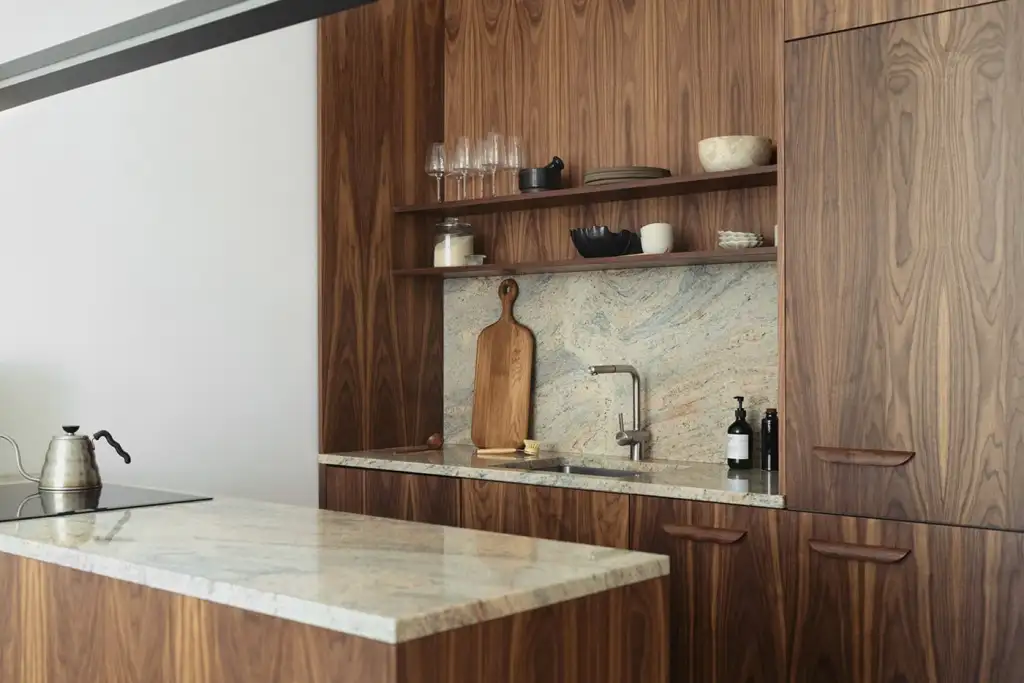

Quartz Countertops
Best Overall for Most Homes
Quartz has become one of the most popular countertop materials in modern kitchens because it offers an exceptional balance of durability, appearance, and ease of maintenance. For many homeowners, it provides the best combination of long-term performance and everyday practicality. Unlike granite, which is cut directly from natural stone, quartz countertops are engineered using approximately 90–95% crushed natural quartz combined with polymer resins and pigments. This manufacturing process creates a dense, non-porous surface that performs exceptionally well in busy kitchens.
One of quartz’s biggest advantages is its resistance to staining. Because the surface is non-porous, liquids like coffee, wine, cooking oil, juice, and tomato sauce cannot easily penetrate the countertop. This means spills are less likely to leave permanent marks when cleaned up promptly, making quartz particularly appealing for families with children or homeowners who entertain frequently.
Quartz is also highly resistant to scratches during normal household use. The natural quartz crystals used to manufacture the slabs are among the hardest minerals on Earth, allowing the finished countertop to withstand years of food preparation, dishes, and everyday activity without showing significant wear. While you should never cut directly on the surface, accidental contact with kitchen utensils is unlikely to cause damage.
Another reason homeowners choose quartz is its consistency. Because it’s engineered rather than quarried as a single piece of natural stone, colours and patterns remain much more uniform from slab to slab. This makes it easier to achieve a clean, contemporary kitchen design while still offering options that resemble marble, granite, or concrete.
Maintenance is where quartz truly stands out. Unlike granite or marble, quartz never needs to be sealed. Daily cleaning usually requires nothing more than warm water, a soft cloth, and a mild household cleaner. For homeowners looking to minimize maintenance while still investing in a premium countertop, this is a major advantage.
Quartz isn’t perfect, however. One of its few weaknesses is heat resistance. Although it easily handles warm cookware and normal kitchen temperatures, placing an extremely hot pot or cast-iron pan directly from the stove or oven onto the countertop can damage the resin that binds the quartz together. Using trivets or heat pads is a simple way to avoid this issue.
Pros
- Highly scratch resistant for everyday household use
- Excellent stain resistance thanks to its non-porous surface
- Never requires sealing
- Extremely easy to clean and maintain
- Available in hundreds of colours, patterns, and finishes
- Consistent appearance throughout the slab
- Excellent choice for busy families and high-traffic kitchens
Cons
- Less heat resistant than natural granite
- Can be damaged by prolonged exposure to extremely high temperatures
- Premium colours and designer collections may cost more than standard options
For homeowners looking for a countertop that performs well in almost every category, quartz is often considered the benchmark. It offers excellent durability with very little maintenance, making it one of the safest long-term investments for most kitchens.
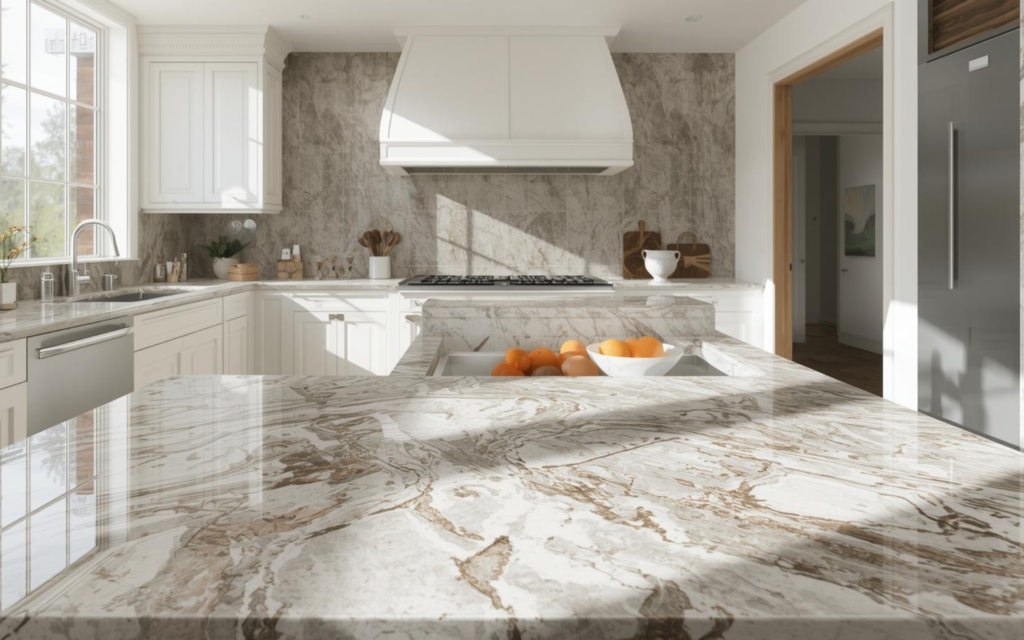
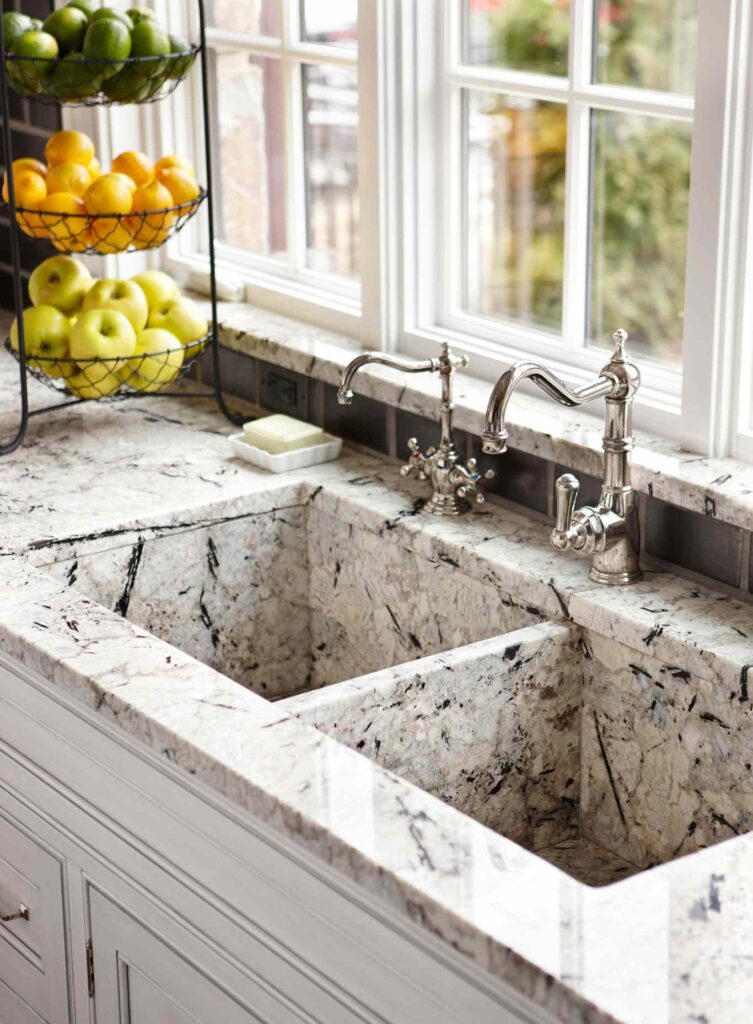
Granite Countertops
Best for Natural Stone Durability
Granite has remained one of the most sought-after countertop materials for decades because of its exceptional strength, natural beauty, and longevity. Formed deep within the earth under extreme heat and pressure, granite is an incredibly hard igneous rock that has been used in construction for centuries.
One of granite’s greatest strengths is its ability to withstand heat. Unlike many engineered materials, granite is naturally resistant to high temperatures, allowing it to tolerate hot cookware far better than most countertop surfaces. Homeowners who cook frequently often appreciate the peace of mind that comes with having a countertop capable of handling the demands of a busy kitchen.
Granite is also extremely resistant to scratches. Under normal household use, it’s very difficult to scratch the surface with everyday kitchen utensils. While cutting boards should still be used to protect both the countertop and your knives, granite easily withstands years of regular cooking and food preparation.
Every granite slab is unique, which is one of its biggest selling points. Variations in mineral composition create natural colours, veining, and movement that can’t be replicated exactly by engineered products. For homeowners who value one-of-a-kind design, this individuality is often a major advantage.
Because granite is a natural stone, it does require periodic sealing to maintain its stain resistance. Without an effective seal, oils, wine, coffee, and other liquids can gradually penetrate the microscopic pores within the stone. Fortunately, modern sealers are highly effective, and many only need to be reapplied every few years depending on the product and level of use.
With proper care, granite countertops can last for several decades and, in many cases, the lifetime of the home. Their combination of durability, heat resistance, and timeless appearance continues to make them one of the most popular choices for Calgary homeowners looking for a premium natural stone countertop.
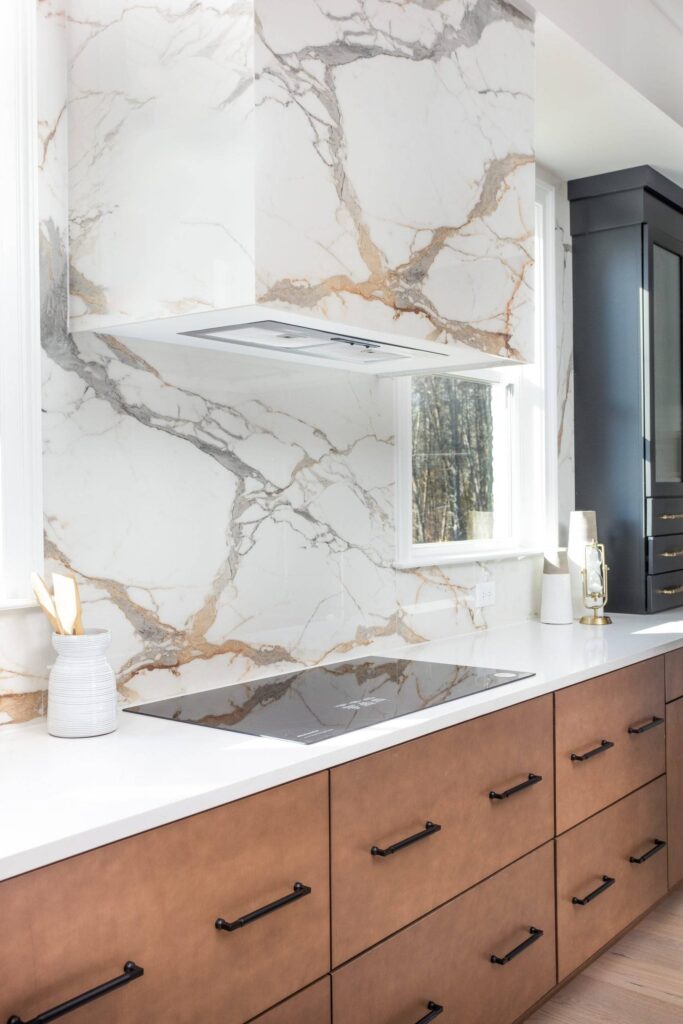
Porcelain Countertops
Best for Heat Resistance, UV Protection, and Modern Design
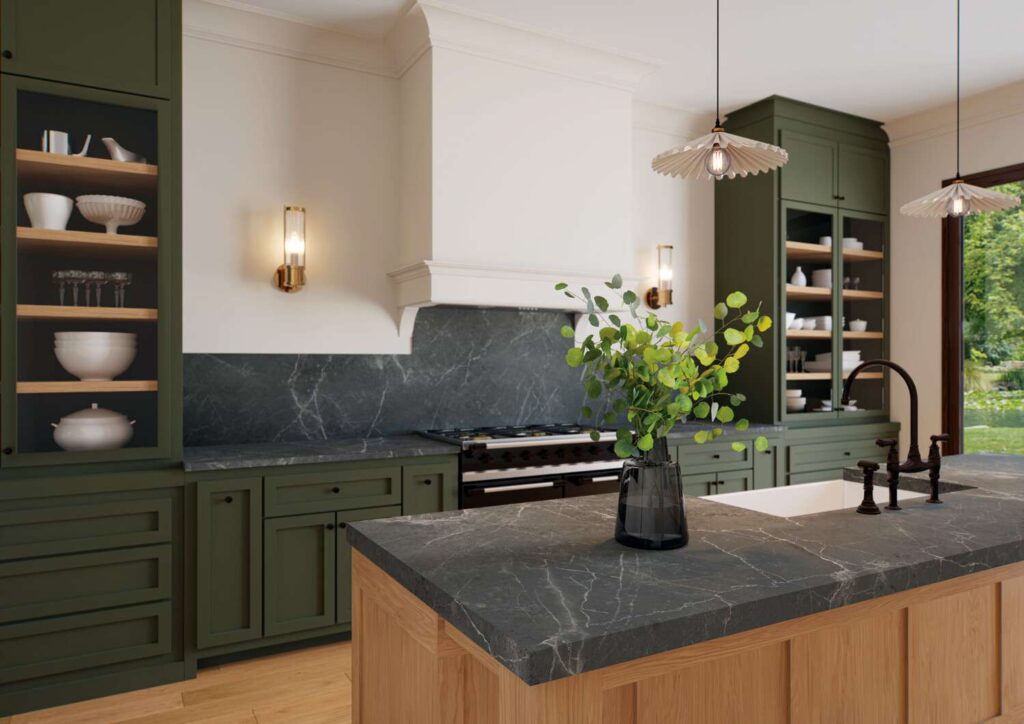
Porcelain countertops have become one of the fastest-growing countertop materials over the past few years. While they aren’t as common as quartz or granite yet, many homeowners are choosing porcelain because it offers exceptional durability, excellent heat resistance, and a sleek, contemporary appearance.
Porcelain is manufactured by firing refined clay and natural minerals at extremely high temperatures—often exceeding 2,000°F (1,100°C). This process creates an incredibly dense, hard surface that resists scratches, stains, moisture, and heat. Unlike many other countertop materials, porcelain is also completely resistant to UV rays, making it an excellent choice for outdoor kitchens or indoor spaces with large windows and significant sunlight.
One of porcelain’s biggest advantages is its resistance to heat. Homeowners who cook frequently appreciate that hot pots and pans are much less likely to damage porcelain compared to some engineered surfaces. While it’s still good practice to use trivets to protect any countertop, porcelain handles high temperatures exceptionally well.
Porcelain is also non-porous, meaning liquids cannot penetrate the surface. Coffee, wine, tomato sauce, cooking oils, and other common kitchen spills are unlikely to stain the countertop when cleaned promptly. Because the material doesn’t absorb moisture, porcelain never needs to be sealed and is naturally resistant to bacteria and mould growth.
Another reason porcelain has become increasingly popular is its versatility in design. Modern manufacturing allows porcelain slabs to convincingly replicate marble, concrete, wood, and natural stone while offering greater durability and requiring significantly less maintenance. Homeowners can achieve the appearance of luxurious marble without worrying about etching or frequent sealing.
However, porcelain isn’t without limitations. Although the surface itself is incredibly hard, its edges can be more susceptible to chipping if struck by a heavy object. Fabricating porcelain also requires specialized equipment and experienced installers because mistakes can be costly. For this reason, it’s especially important to choose an experienced countertop fabricator when selecting porcelain.
Pros
- Exceptional scratch resistance
- Outstanding heat resistance
- Completely UV resistant, making it suitable for outdoor applications
- Non-porous and highly stain resistant
- Never requires sealing
- Available in a wide variety of realistic stone and marble designs
- Easy to clean and maintain
Cons
- Edges can chip if impacted by heavy objects
- Installation requires specialized fabrication equipment
- Fewer edge profile options compared to quartz or granite
- Can be more expensive than some traditional countertop materials
For homeowners who want an ultra-modern countertop that performs exceptionally well against heat, sunlight, and stains, porcelain is one of the most durable options available.
Solid Surface Countertops
Best for Seamless Designs and Easy Repairs
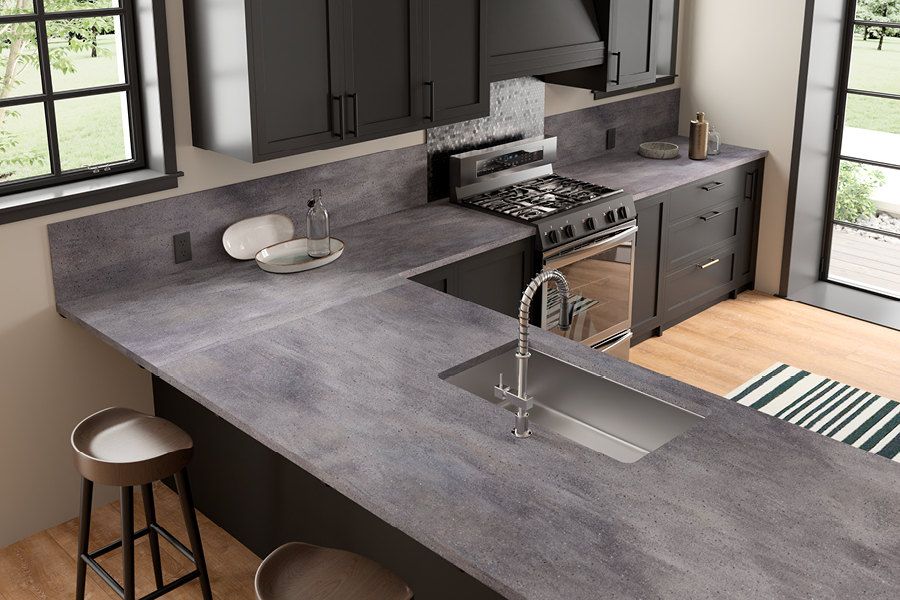
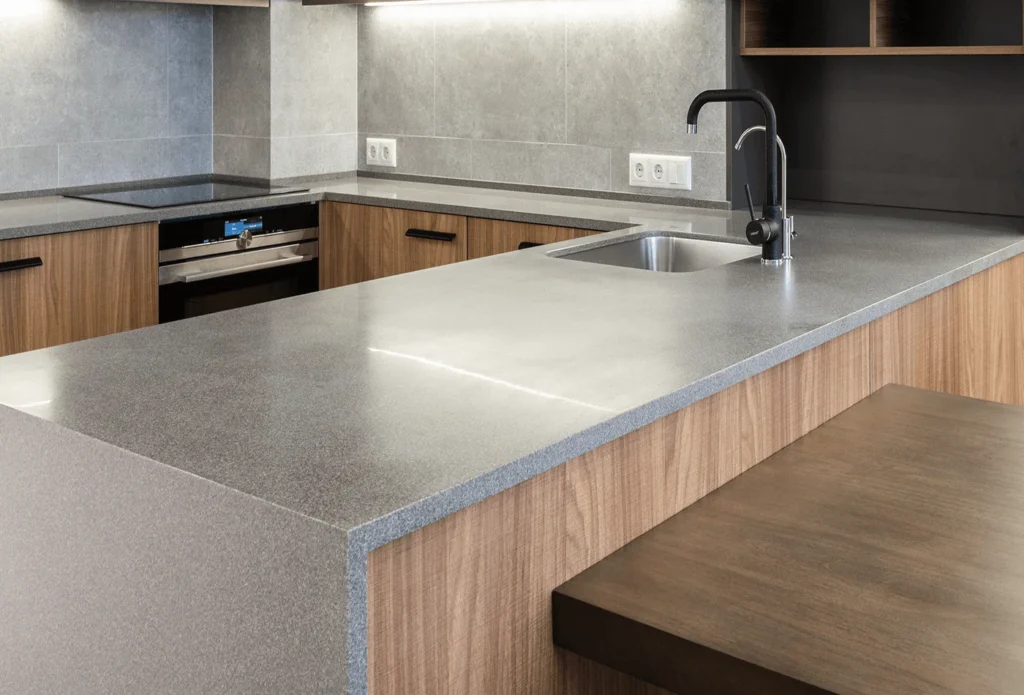
Solid surface countertops, commonly known by brand names like Corian®, have been a popular choice for decades because they offer a clean, seamless appearance and can often be repaired if damaged. Unlike natural stone, solid surface countertops are manufactured using acrylic or polyester resins combined with natural minerals. Because the material is consistent throughout its entire thickness, minor scratches, burns, or surface damage can often be sanded out instead of requiring complete replacement.
One of the biggest advantages of solid surface countertops is their seamless appearance. Fabricators can join multiple sections together using colour-matched adhesives, creating joints that are nearly invisible. Integrated sinks can also be installed without visible seams, giving kitchens a smooth, contemporary appearance that’s difficult to achieve with natural stone. Solid surface countertops are also completely non-porous, meaning they resist moisture, bacteria, and everyday household stains. They don’t require sealing, making them relatively easy to maintain.
Where solid surface begins to fall behind quartz and granite is overall hardness. Because it’s a softer material, it scratches more easily from everyday use. Sliding heavy cookware across the surface or accidentally cutting directly on the countertop may leave visible marks over time. Heat is another consideration. Hot cookware placed directly on the surface can scorch or discolor the material, so trivets are strongly recommended. Despite these limitations, many homeowners appreciate that damage isn’t necessarily permanent. Minor scratches can often be repaired, allowing the countertop to regain much of its original appearance without replacement.
Pros
- Non-porous and hygienic
- Nearly invisible seams
- Easy to repair if scratched
- Doesn’t require sealing
- Comfortable, warm feel compared to stone
- Available in many colours and patterns
Cons
- Softer than quartz, granite, and porcelain
- More susceptible to scratching
- Lower heat resistance
- Can develop wear over time in high-use kitchens
Solid surface countertops are an excellent choice for homeowners who prioritize seamless aesthetics and easy repairability over maximum hardness.
Butcher Block Countertops
Best for Warmth and Natural Character
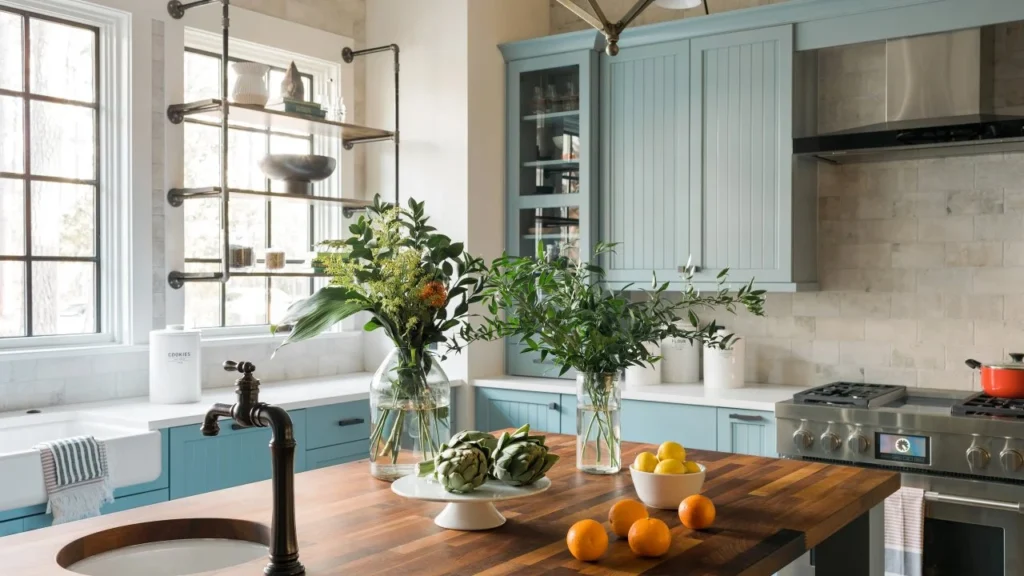
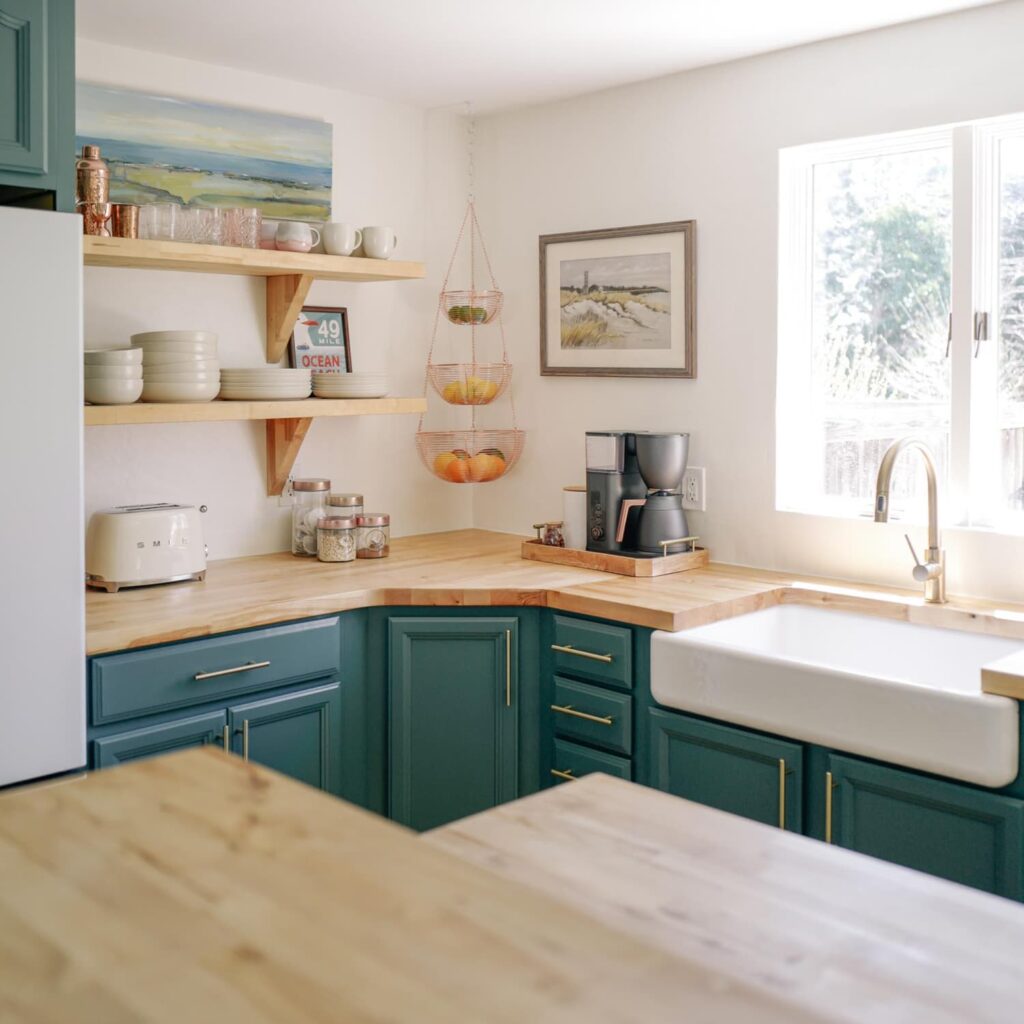
Few countertop materials create the warmth and character of real wood. Butcher block countertops have remained popular in farmhouse, rustic, Scandinavian, and transitional kitchen designs because they add natural texture that’s difficult to replicate with stone. Unlike granite or quartz, butcher block is a living material. Wood naturally expands and contracts with changes in humidity, which means it behaves differently throughout the seasons.
One of butcher block’s biggest advantages is that it’s repairable. While scratches, dents, and knife marks are much more common than they are with stone countertops, the surface can usually be sanded and refinished multiple times throughout its lifespan. This means years of wear don’t necessarily require replacement—they often just require refinishing.
Many homeowners also enjoy using butcher block as a dedicated food preparation area because the surface is slightly gentler on knives than stone. However, cutting directly on the countertop should still be done thoughtfully, as repeated cutting can create grooves that trap moisture and bacteria.
The primary drawback of butcher block is maintenance. Wood requires regular oiling or sealing to prevent moisture from penetrating the surface. Without proper maintenance, wood can dry out, crack, stain, or warp over time. Standing water around sinks is particularly important to avoid, as prolonged moisture exposure can eventually damage the wood fibers. Heat can also be an issue. Setting hot cookware directly on butcher block may scorch or burn the surface, leaving permanent marks. For homeowners willing to perform occasional maintenance, butcher block offers a unique appearance that actually improves with age as it develops character and patina.
Pros
- Beautiful natural appearance
- Adds warmth to any kitchen
- Can be sanded and refinished multiple times
- Repairable if scratched or dented
- Gentle on knives
- Can last for decades with proper care
Cons
- Requires regular oiling or sealing
- Susceptible to scratches and dents
- Can stain if liquids aren’t cleaned promptly
- Moisture can cause warping or cracking
- Less heat resistant than stone
Butcher block isn’t the toughest countertop available, but few materials offer the same combination of warmth, repairability, and timeless character.
Laminate Countertops
Best Budget-Friendly Option
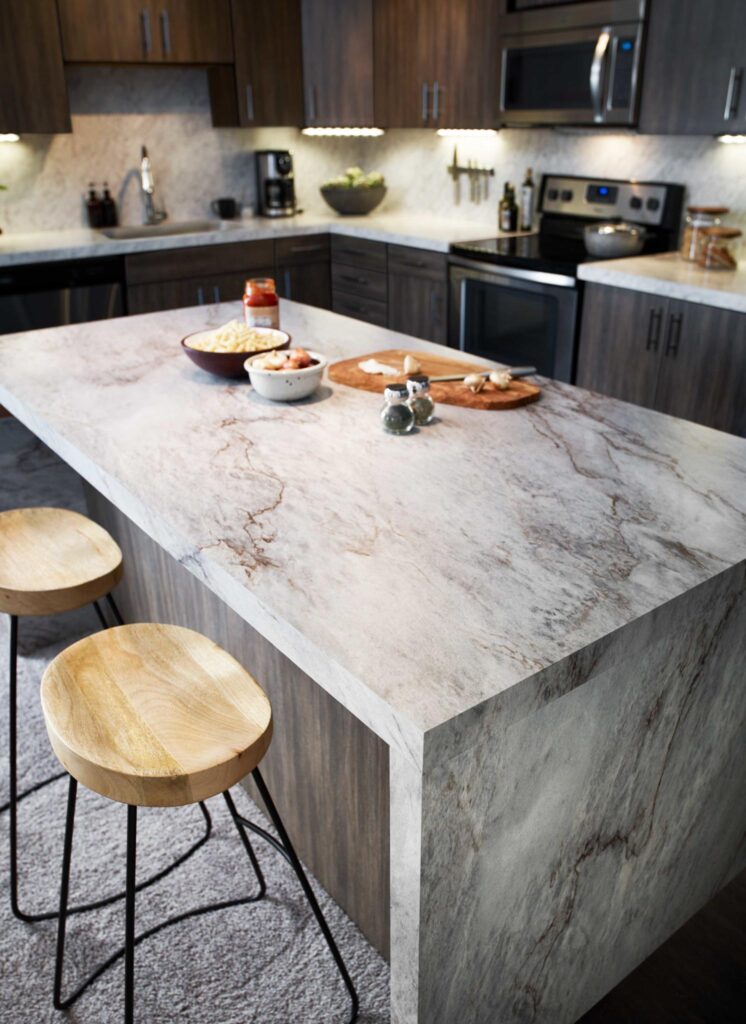
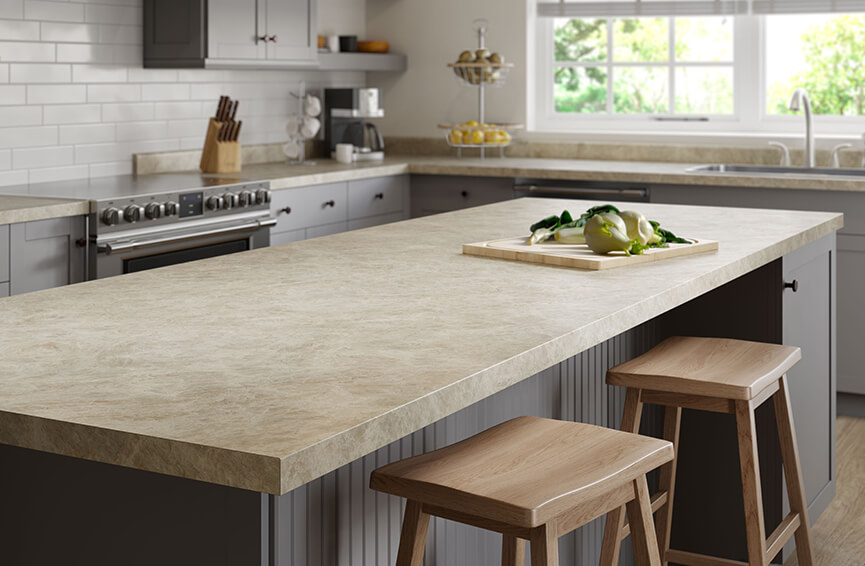
Laminate countertops have changed dramatically over the past several decades. While older laminate products were often associated with inexpensive renovations, today’s high-pressure laminates can convincingly mimic granite, marble, wood, and concrete at a fraction of the cost. Laminate countertops consist of decorative layers bonded to a particleboard or MDF core. This construction keeps costs low while offering a wide range of colours and patterns. For homeowners working within a limited renovation budget, laminate remains one of the most affordable ways to dramatically improve the appearance of a kitchen. Modern laminates are surprisingly resistant to stains and are generally easy to clean with everyday household products. Because the decorative surface is non-porous, most spills wipe away without difficulty.
However, laminate simply doesn’t offer the same long-term durability as natural or engineered stone. The surface is more susceptible to scratches from everyday use, and sharp objects can permanently damage the finish. Heat is another significant limitation. Placing hot cookware directly on laminate can scorch, blister, or delaminate the surface, resulting in permanent damage. Unlike wood countertops, laminate cannot usually be repaired once it’s chipped or deeply scratched. In many cases, replacement is the only practical solution. Despite these limitations, laminate continues to be an excellent option for rental properties, starter homes, secondary kitchens, and homeowners who want an attractive countertop without investing in premium stone.
Pros
- One of the most affordable countertop materials
- Huge variety of colours and designs
- Easy to clean
- Low maintenance
- Quick installation
Cons
- More susceptible to scratches
- Poor heat resistance
- Difficult to repair if damaged
- Shorter lifespan than stone countertops
- Can chip along exposed edges
For homeowners prioritizing affordability over maximum durability, laminate continues to offer excellent value.
Marble Countertops
Best for Luxury Appearance
Marble has been associated with luxury architecture for thousands of years, and it’s easy to understand why. Its dramatic veining, natural movement, and timeless elegance make it one of the most beautiful countertop materials available. However, beauty and durability don’t always go hand in hand. Compared to granite and quartz, marble is a softer and more porous natural stone. While it’s certainly durable enough to last for generations, it requires significantly more care to maintain its pristine appearance. One of marble’s defining characteristics is its susceptibility to etching. Acidic foods such as lemons, vinegar, tomatoes, and wine can react with the calcium carbonate in marble, leaving dull spots that can’t simply be wiped away.
Marble is also more prone to scratching than harder stones. Although many homeowners embrace these imperfections as part of the stone’s natural aging process, others prefer materials that maintain their original appearance with less effort. Like granite, marble should be sealed periodically to help reduce staining. Even with proper sealing, it’s wise to clean spills quickly to prevent oils, wine, or coloured liquids from penetrating the stone.
Despite its maintenance requirements, marble remains one of the most desirable countertop materials for homeowners who value timeless beauty above all else. Many luxury kitchens intentionally showcase the natural patina that develops over decades of use.
Pros
- Stunning natural veining
- Timeless luxury appearance
- Naturally cool surface that’s excellent for baking
- Can last for generations
- Adds significant visual appeal
Cons
- Softer than granite and quartz
- More susceptible to scratches
- Can etch from acidic foods
- Requires periodic sealing
- More likely to stain if spills aren’t cleaned promptly
For homeowners who appreciate natural beauty and don’t mind regular maintenance, marble remains one of the most iconic countertop materials ever produced.
Here’s What to Do Next
Choosing the most durable kitchen countertop material isn’t about finding a single “best” option—it’s about finding the one that’s best suited to your home, cooking habits, and long-term expectations. If you want a countertop that’s easy to maintain and highly resistant to stains, scratches, and everyday wear, quartz is an excellent all-around choice for most households. If you frequently cook with high heat and appreciate the unique character of natural stone, granite offers exceptional durability and timeless appeal. Homeowners looking for a sleek, modern surface with outstanding heat and UV resistance may prefer porcelain, while those prioritizing warmth and natural character may find butcher block worth the additional maintenance.
It’s also important to remember that even the highest-quality countertop material can underperform if it isn’t fabricated and installed correctly. Accurate templating, precise fabrication, proper cabinet support, and professional installation all play a significant role in how well your countertops perform over the years. Investing in quality workmanship is just as important as choosing the right material.
At AAA Countertops, we’ve been helping Calgary homeowners choose and install premium kitchen countertops for more than 18 years. Whether you’re deciding between quartz, granite, porcelain, or another surface, our team can walk you through the pros and cons of each option based on your lifestyle, budget, and design goals. If you’re planning a kitchen renovation, contact AAA Countertops today for a free consultation and quote. We’ll help you choose a countertop that’s built to look beautiful and perform reliably for years to come.

$500 Off your install or a free sink
Limited Time Offer – Call or Get a Free Estimate Today!
What our customers say
Request an Estimate Below
Please answer the questions below to receive an estimate and get access to our $500 off or free sink promo.